 The Frosterley Table
What Is Scampi and Chips? The Pub Classic Explained
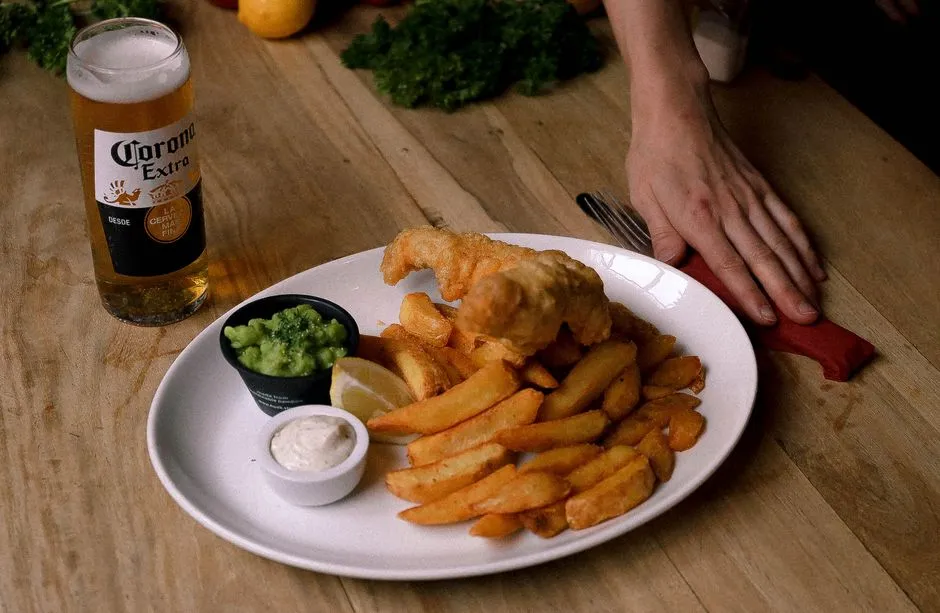
What is scampi and chips?
Scampi and chips is a British pub and chip-shop plate of breaded or battered shellfish tails, fried until golden and served with chips, usually alongside tartare sauce, a wedge of lemon and peas. The shellfish is Nephrops norvegicus, the small clawed crustacean also sold whole as langoustine, Norway lobster or Dublin Bay prawn. What lands on the plate varies by kitchen: some serve whole tails, others serve "formed" pieces made from reconstituted tail meat.
One thing matters before anything else. Scampi is a crustacean, which is one of the 14 allergens UK food law requires businesses to declare, so anyone with a shellfish allergy should treat it as off the menu and should also ask whether the chips are fried in the same oil.
Scampi sits on the same laminated card as the pie, the ploughman's and the gammon. If you want the rest of that list, our guide to British pub food classics walks through fifteen of them.
What animal is scampi?
The UK government keeps an official list of fish names accepted at the point of retail. On the Defra list of commercial designations of fish, Nephrops norvegicus is filed under shellfish with the permitted names "Dublin bay prawn or Langoustine or Norway lobster or Scampi". Four names, one animal.
Seafish, the public body that supports the UK seafood industry, explains that Nephrops "are usually caught from well-defined areas of soft mud and sandy habitats", and that "nearly 59% of the Nephrops caught globally in 2021" came from UK waters. The same page draws a useful line between two fisheries: creels land live Nephrops "usually destined for high value export markets", while trawl nets catch "larger volumes of smaller Nephrops which are usually used to make scampi". The big, handsome langoustine on a restaurant platter and the crumbed nugget in a pub basket are the same species, sorted by size.
The word itself is Italian. Wiktionary gives it as the plural of scampo, and records the British sense separately: the battered or breaded tails of this species, "usually served with chips". In British English nobody orders "a scampo"; scampi is treated as a mass noun, like rice.
In North America the word drifts. "Shrimp scampi" there usually describes prawns cooked in garlic butter, which is a different dish altogether. In a British pub, scampi means crumbed Nephrops tails.
What does "pub scampi" actually mean on a menu?
Seafish puts it plainly: "Scampi is a popular dish made from battered or breaded Nephrops tails." In practice, breadcrumbs are the British pub default and batter is the occasional variation.
Ready-breaded frozen scampi is widely sold in Britain, and many kitchens use a bought-in product rather than crumbing tails by hand. A menu rarely tells you which, which is why scampi tastes broadly similar from one village pub to the next. The visible difference is the grade inside the crumb.
Wholetail or formed: what is the difference?
Seafish sets out the grades. The most premium are "'single wholetail' scampi", "made of a single langoustine tail", followed by "'wholetail' or 'whole' scampi, made of a maximum of 3 whole tails". At the budget end, products "are made from reconstituted tail meat" and "will be labelled as 'formed' or "reformed" scampi".
A real label shows what that means. A retailer specification sheet for Young's Scampi 220g, dated 29/09/2022, describes the product as "Formed British and Irish Langoustine Tails with Added Water Coated in Breadcrumbs". Its first ingredient is "Scampi (CRUSTACEAN) (37%)", followed by wheat flour, rapeseed oil, water, potato starch, wheat starch, rice flour, wheat gluten, modified maize starch, yeast, salt, oat fibre, raising agents and stabilisers. In other words, a little over a third of that product by weight is shellfish; the rest is coating, water and the things that hold it together.
None of that makes formed scampi bad food. It does mean that "scampi" on a menu covers a wide range. Our editorial rule of thumb: if the menu says "wholetail", expect recognisable tails with a visible curve; if it just says "scampi", the bar staff can usually tell you which product the kitchen buys. Asking is normal, and our guide to British pub etiquette covers how ordering at the bar works if you have not done it before.
What comes with scampi and chips?
The classic plate is short and settled: scampi, chips, a ramekin of tartare sauce and a lemon wedge. Most pubs add peas, either garden peas or mushy peas, and some add a small dressed salad or a slice of bread and butter. Malt vinegar on the table is for the chips, and plenty of people put it on the scampi too.
Tartare sauce is a mayonnaise-style sauce with chopped pickles and capers, and it is not allergen-neutral. One catering-size product, Colman's Tartare Sauce 2.25L as listed by the foodservice wholesaler Brake, lists spirit vinegar, rapeseed oil, "gherkins (8%)", "pasteurised free range British EGG yolk powder (1.9%)", "capers (1.3%)" and "MUSTARD flour", and declares "Contains: Egg and Mustard". House-made tartare will differ, but egg is the usual base.
Which allergens are in scampi and chips?
The Food Standards Agency's food allergy and intolerance advice for consumers lists the 14 allergens food law treats as "the most potent and prevalent". Several can turn up on a plate of scampi and chips:
- Crustaceans, listed by the FSA as "crustaceans (such as prawns, crabs and lobsters)". The scampi itself is a crustacean, which is why the Young's label marks it "Scampi (CRUSTACEAN)".
- Cereals containing gluten, listed as "(such as wheat, rye, barley and oats)". Breadcrumb and batter coatings are usually wheat-based; the Young's sheet above declares "CONTAINS: CRUSTACEANS, OATS, WHEAT".
- Eggs and mustard, from tartare sauce, as on the Colman's catering label.
- Fish or other allergens via the fryer. If chips, scampi and battered fish share a fryer, allergens can travel in the oil. The FSA tells diners to remind staff "to be careful of cross-contamination or added allergens from glazes, garnishes, sauces, cooking oils".
The ingredients and allergens in any specific pub dish depend on which supplier the kitchen buys from and how it cooks, and both can change without the menu changing. The FSA states that "Food businesses must inform customers if any products they provide contain any of the 14 regulated allergens", and that this may include advice "that you ask a member of staff about the allergen contents of a dish you might want to order." The same page notes that businesses "are not required to offer you an alternative meal to suit your need."
If you have an allergy, tell the staff when you order, name the foods that cause a reaction, and ask specifically about shared fryer oil. If you think you or someone else is having a severe allergic reaction, the NHS anaphylaxis guidance is direct: "Call 999 if you think you or someone else is having an anaphylactic reaction." It also says to "Use an adrenaline auto-injector (such as an EpiPen) if you have one."
For diners avoiding meat and fish altogether, our guide to vegetarian pub food covers what to order instead.
Can you make pub-style scampi at home?
Frozen breaded scampi is sold in supermarket freezers, and each pack carries the manufacturer's cooking instructions. Follow those instructions exactly, check the product is cooked through before serving, and do not refreeze it once defrosted, as the Young's sheet states. Deep-fat frying carries a real risk of burns and fire. If you use a fryer, follow its manual for oil level, temperature and supervision, and never leave hot oil unattended.
Is scampi a sustainable choice?
Seafish's page answers "Recent media coverage" suggesting that "consumers should avoid scampi because the fishery causes environmental damage" with the view that "The reality is much more nuanced." Citing 2023 scientific advice from ICES, the international marine science body, it reports that "9 of the 12 Nephrops sub-fisheries are at healthy levels", and that the UK Nephrops fishery "has been part of a five-year Fisheries Improvement Project (FIP) since 2019". It also concedes: "It would be wrong to say everything in the fishery is perfect." Read that as an industry body's position rather than an independent rating, and ask the pub where its scampi comes from if that matters to you.
More classic plates live in our pub food section.
Sources
- Defra: Commercial designations of fish, United Kingdom
- Seafish: Why scampi caught in UK waters can stay on the menu
- Wiktionary: scampi
- One Stop product specification: Young's Scampi 220g (392443)
- Brake: Colman's Tartare Sauce 2.25L
- Food Standards Agency: Food allergy and intolerance advice for consumers
- NHS: Anaphylaxis
Frequently asked questions
Is scampi the same as prawns?
Not quite. In Britain, scampi means the tails of Nephrops norvegicus, a small clawed crustacean. The UK government's list of accepted retail fish names gives that species the names Dublin Bay prawn, langoustine, Norway lobster or scampi. Most other prawns and shrimp are different species entirely. For allergy purposes, though, both count as crustaceans, so anyone avoiding prawns should avoid scampi too.
What is the difference between wholetail and formed scampi?
Seafish, the public body supporting the UK seafood industry, describes single wholetail scampi as one langoustine tail and wholetail scampi as a maximum of three whole tails. Cheaper formed or reformed scampi is made from reconstituted tail meat. One formed retail product, Young's Scampi 220g, declares scampi at 37% of the ingredients, with the rest made up of crumb coating, water, starches and stabilisers. If a pub menu just says scampi, ask which kind the kitchen serves.
Is pub scampi gluten-free?
Usually not. Breadcrumb and batter coatings are normally wheat-based; the Young's Scampi 220g specification sheet, for example, declares that it contains crustaceans, oats and wheat. Some kitchens may offer alternatives, and fryer oil shared with battered food can carry gluten onto otherwise safe items. UK food businesses must provide information on the 14 regulated allergens, so tell staff about your needs when you order and ask how the dish is cooked.
What sauce do you eat with scampi?
Tartare sauce is the standard partner: a mayonnaise-style sauce with chopped gherkins and capers, served alongside a lemon wedge. It usually contains egg, and often mustard; one catering-size Colman's tartare sauce declares egg yolk powder and mustard flour and is labelled Contains: Egg and Mustard. Malt vinegar on the table is also common, mostly for the chips. If you have an egg or mustard allergy, ask about the sauce before it arrives.