 The Frosterley Table
British Pub Food Classics: 15 Traditional Dishes Explained
- What Is British Pub Food?
- The Big Three: Dishes Every Pub Menu Is Built On
- Sausages, Mince, and Batter: The Comfort Tier
- The Cold Counter and the Griddle
- Bar Snacks Worth Taking Seriously
- Pudding: Yes, You're Having One
- The Modern Classic
- Quick Menu Decoder
- How to Order Like You've Done This Before
- Where to Eat Your Way Through the List
What Is British Pub Food?
British pub food is hearty, unpretentious cooking built around a core canon of dishes: fish and chips, the Sunday roast, meat pies, sausages with mash, and a handful of bar snacks and puddings that have been served over pub counters for generations. It grew out of home cooking rather than restaurant kitchens, which is why the best versions taste like something a very good grandparent might make — generous portions, plenty of gravy, and no garnish that doesn't earn its place.
This guide walks through 15 classics you'll find on a typical English pub menu: what each dish actually is, where it comes from, and what separates a proper version from a sad microwaved one. If you're visiting Britain and staring at a menu full of unfamiliar names — toad in the hole? ploughman's? rarebit? — this is the decoder.
The Big Three: Dishes Every Pub Menu Is Built On
1. Fish and Chips
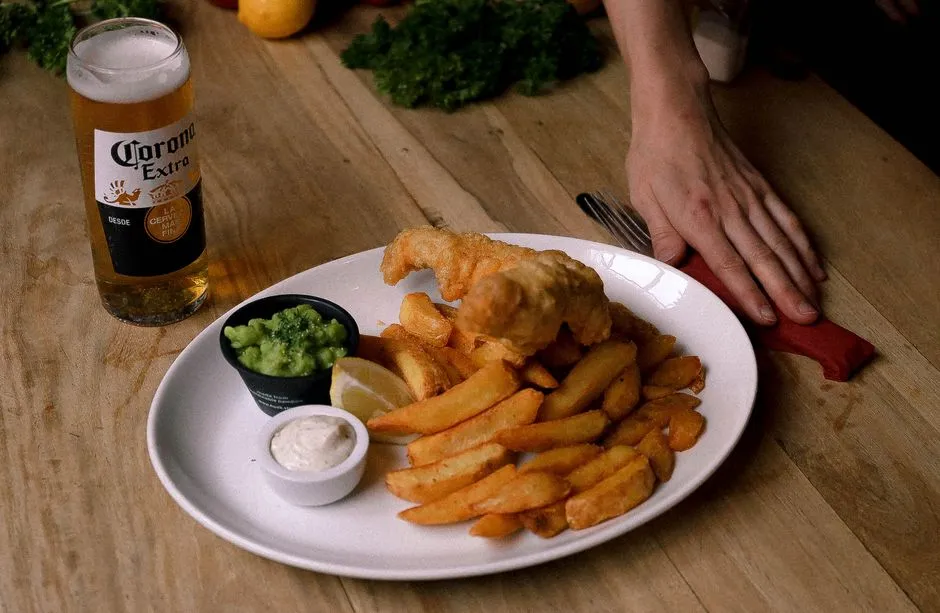
The undisputed heavyweight. A fillet of white fish — usually cod or haddock — dipped in batter, deep-fried until the coating shatters, and served over thick-cut chips. Fried fish and chips have been sold together in Britain since the Victorian era, and several towns still argue over who paired them first.
A proper pub version comes with mushy peas (marrowfat peas cooked down to a soft green mash), tartare sauce, and a wedge of lemon. Look for batter that's crisp and light rather than greasy, and chips cut from actual potatoes. Malt vinegar on the chips is traditional; whether you use it is between you and your conscience.
2. The Sunday Roast
The centrepiece of British pub eating: roasted meat (beef, lamb, pork, or chicken), roast potatoes, seasonal vegetables, Yorkshire pudding, and gravy, traditionally served on Sundays — often from midday until the kitchen runs out. Yorkshire pudding is not a dessert; it's a crisp, puffed batter case that exists mainly to hold gravy.
Many pubs serve roasts only on Sundays, and the good ones sell out by mid-afternoon. It's a big enough subject that we've written a full guide to the Sunday roast covering the history, the sides, and the etiquette of the carvery queue.
3. Steak and Ale Pie
Chunks of beef slow-cooked in ale until tender, encased in pastry, served with mash or chips and more gravy. Purists insist a true pie is fully encased — pastry base, sides, and lid — and regard a bowl of stew with a puff-pastry hat as an impostor. Menus don't always tell you which you're getting, so it's a fair question to ask at the bar.
Variations include steak and kidney pie (an older tradition, richer and more divisive) and chicken and mushroom. The filling should be thick and glossy, never watery.
Sausages, Mince, and Batter: The Comfort Tier
4. Bangers and Mash
Pork sausages on a pile of mashed potato, drowned in onion gravy. "Bangers" is old slang for sausages — the usual story is that cheaper wartime sausages, padded with water, would pop and hiss in the pan. Regional sausages are worth seeking out: the Cumberland (coiled, peppery) and the Lincolnshire (herby, sage-forward) are the two most famous.
5. Shepherd's Pie and Cottage Pie
Minced meat in gravy, topped with mashed potato and baked until the top browns. The distinction matters to Brits:
| Dish | Meat | Notes |
|---|---|---|
| Shepherd's pie | Lamb | Shepherds herd sheep — hence the name |
| Cottage pie | Beef | The older, broader term |
| Fish pie | White fish, salmon, often prawns | Same mash top, creamy sauce instead of gravy |
Menus frequently use "shepherd's pie" loosely for the beef version. Locals notice.
6. Toad in the Hole
Sausages baked into Yorkshire pudding batter, so the batter puffs up crisp around them, served with onion gravy. No toads are involved and nobody is entirely sure how the name arose — theories abound, evidence doesn't. It's one of the most comforting things a pub kitchen can produce and one of the cheapest to make well, which makes a bad version genuinely unforgivable.
7. Scampi and Chips
Breaded, deep-fried tails of langoustine — a small relative of the lobster caught in cold British and Irish waters — served with chips, peas, and tartare sauce. Scampi became a pub staple in the mid-20th century and survives as basket-meal royalty. Good scampi tastes sweet and delicate under the crumb; rubbery scampi means it's been fried from frozen with too little care.
The Cold Counter and the Griddle
8. Ploughman's Lunch
A cold plate: a generous wedge of cheese (usually a strong cheddar, sometimes Stilton), crusty bread, butter, sweet dark pickle, pickled onions, and often apple, salad, or a slice of ham. The romantic image is a farm labourer's field lunch; in truth, the ploughman's as a named menu item was heavily popularised by cheese marketing campaigns in the mid-20th century. It's still a great order — essentially a one-person cheese board with history attached.
9. Gammon, Egg and Chips
A thick steak of cured pork leg, grilled and topped with a fried egg, a grilled pineapple ring, or — the correct answer — both, alongside chips and peas. Gammon is cured like bacon but cut thick like a steak, giving it a salty-sweet edge that the egg yolk and pineapple play against. An unfashionable dish that pub-goers order in quiet defiance of fashion.
10. Welsh Rarebit
Not rabbit. A rich cheese sauce — typically sharp cheddar melted with ale or milk, mustard, and Worcestershire sauce — poured over toast and grilled until blistered. It's cheese on toast that went to finishing school. The name's origin is murky and much-argued; the dish itself dates back to at least the 18th century. Often served as a starter or light lunch, sometimes topped with a poached egg (which upgrades it to a buck rarebit).
Bar Snacks Worth Taking Seriously
11. Scotch Egg
A boiled egg wrapped in seasoned sausage meat, coated in breadcrumbs, and deep-fried. Despite the name, its origins are debated and probably not Scottish. The pub-quality benchmark: a warm, freshly fried scotch egg with a slightly soft yolk is a different food entirely from the chilled, chalky supermarket version. Many gastropubs now treat it as a signature item.
12. Pork Pie
Seasoned pork in a hot-water-crust pastry, sealed with a layer of savoury jelly, eaten cold — ideally with English mustard and a pint. The most famous style comes from Melton Mowbray in Leicestershire, where the traditional pie is made with uncured meat (so the filling is grey rather than pink) and carries protected geographical status. A good pork pie is dense, peppery, and built for one hand while the other holds your drink.
Pudding: Yes, You're Having One
13. Sticky Toffee Pudding
A dark sponge made with dates, soaked in toffee sauce, served hot with custard, cream, or ice cream. Most accounts trace its modern fame to the Lake District, and several establishments claim parentage. It is far lighter than it sounds and more addictive than it should be — the single best answer to "one dessert, two spoons."
14. Apple Crumble and Custard
Stewed apples under a buttery, sugary crumble topping, baked until golden, flooded with hot custard. Crumble became a British household standard around the Second World War, when rationing made full pastry a luxury, and never left. Pubs rotate the fruit with the seasons — apple and blackberry in autumn, rhubarb in spring — but the custard is non-negotiable.
The Modern Classic
15. Chicken Tikka Masala and the Pub Curry
No honest list of famous British pub dishes can skip the curry. Chicken tikka masala — grilled marinated chicken in a spiced, creamy tomato sauce — was almost certainly invented in Britain, and a government minister once famously declared it a true British national dish. Its exact birthplace is contested (Glasgow presses the strongest claim). Many pubs run a weekly curry night, serving it with rice, naan, and often a pint included in the price. It's as much a part of modern pub eating as anything on this list.
Quick Menu Decoder
A few more terms that trip up visitors reading a typical English pub menu:
| Menu term | What it means |
|---|---|
| Chips | Thick-cut fried potatoes — what Americans call fries are "skinny fries" here |
| Crisps | What Americans call chips; sold in packets behind the bar |
| Mushy peas | Marrowfat peas cooked to a soft, savoury mash — a classic fish-and-chips side |
| Black pudding | Blood sausage; rich, spiced, and better than it sounds |
| Chip butty | Chips in a buttered bread roll — carbohydrate on carbohydrate, unapologetically |
| Pudding | Any dessert, not just custard-style ones |
| Pickle | A sweet, dark, chunky chutney (as on a ploughman's), not a pickled cucumber |
| Gravy | Meat-based sauce that accompanies roughly half the dishes on this list |
If a menu says a dish is "hand-battered," "slow-braised," or names the farm the meat came from, that's usually a good sign the kitchen cooks from scratch. If everything on the menu arrives in identical rectangular portions, the freezer is doing the cooking.
How to Order Like You've Done This Before
A few practical notes for first-timers:
- Order at the bar. Most pubs have no table service for food — note your table number, order and pay at the bar, and the food comes to you.
- Check the specials board. Handwritten specials usually signal what the kitchen actually cooked that day.
- Sunday means roast. Many kitchens narrow the menu on Sundays; arrive before 2pm for the full choice.
- Portions are honest. Starters are optional; chips are rarely necessary as a side because they probably come with the dish anyway.
There are more unwritten rules — rounds, tipping, where to sit — and we've covered them all in our guide to British pub etiquette.
Where to Eat Your Way Through the List
You can find every dish here in any corner of Britain, but the countryside does pub food best — village pubs with one fire, one menu, and a kitchen that's been making the same pie for decades. The North East of England is particularly good hunting ground: the dales of County Durham are dotted with stone-built village pubs, and working up an appetite is easy when you're surrounded by walking country. If you're planning a trip, our guide to things to do in County Durham pairs nicely with a pub lunch or three.
Start with fish and chips or a Sunday roast, work through the pies, and save room for the sticky toffee pudding. The canon has survived this long for a reason.
Frequently asked questions
What is the most popular food in a British pub?
Fish and chips is the definitive pub dish: battered cod or haddock over thick-cut chips, traditionally served with mushy peas and tartare sauce. The Sunday roast runs it close — many pubs treat it as the week's main event, serving roast meat, roast potatoes, Yorkshire pudding, and gravy from midday until the kitchen sells out. Steak and ale pie and bangers and mash round out the most-ordered classics.
What should I order at a British pub if it's my first visit?
Fish and chips is the safest and most iconic first order, and it's hard for a decent kitchen to ruin. If you're visiting on a Sunday, order the roast instead — it's the flagship meal of British pub eating and often only available that day. For something smaller, a ploughman's lunch (cheese, bread, and pickles) or a freshly made scotch egg gives you a genuine taste of the tradition without committing to a full plate.
What is the difference between shepherd's pie and cottage pie?
The meat. Shepherd's pie is made with minced lamb — shepherds herd sheep, hence the name — while cottage pie uses minced beef and is the older, broader term. Both consist of meat in gravy topped with mashed potato and baked until browned. Menus often use "shepherd's pie" loosely for the beef version, but the distinction is real and locals notice it.
Do you order food at the bar in a British pub?
Usually, yes. Most pubs have no table service: you find a table, note its number, then order and pay for food and drinks at the bar. Your food is brought to the table when it's ready. Some gastropubs and dining-focused pubs do offer table service, especially in the restaurant area, so if in doubt, ask at the bar — nobody will mind.
What is a ploughman's lunch?
A ploughman's lunch is a cold plate built around a generous wedge of cheese — usually strong cheddar or Stilton — with crusty bread, butter, sweet dark pickle, pickled onions, and often apple, salad, or ham. Though it evokes a farm labourer's field lunch, the named menu item was heavily popularised by mid-20th-century cheese marketing campaigns. It remains a great order: effectively a one-person cheese board.
Is curry really British pub food?
Effectively, yes. Chicken tikka masala — grilled marinated chicken in a creamy spiced tomato sauce — was almost certainly invented in Britain, with Glasgow pressing the strongest origin claim, and it's widely described as a British national dish. Many pubs run a weekly curry night serving it with rice and naan, often with a pint included, making curry as much a part of modern pub eating as any pie.